Tumen Khuraldai Naadam

A winter gathering. A living inheritance.

Inspired by Mongolia’s traditional warrior culture, Tumen Khuraldai brings speed, strength, precision, and horsemanship together in one winter festival. Mongolian and international competitors join in teams of ten on the shores of Örmii Lake.

The festival declaration calls for remembrance of ancestors, the sharing of history, and a renewal of winter games and celebration. Here, a khuraldai is a gathering around competition, learning, culture, and fellowship.

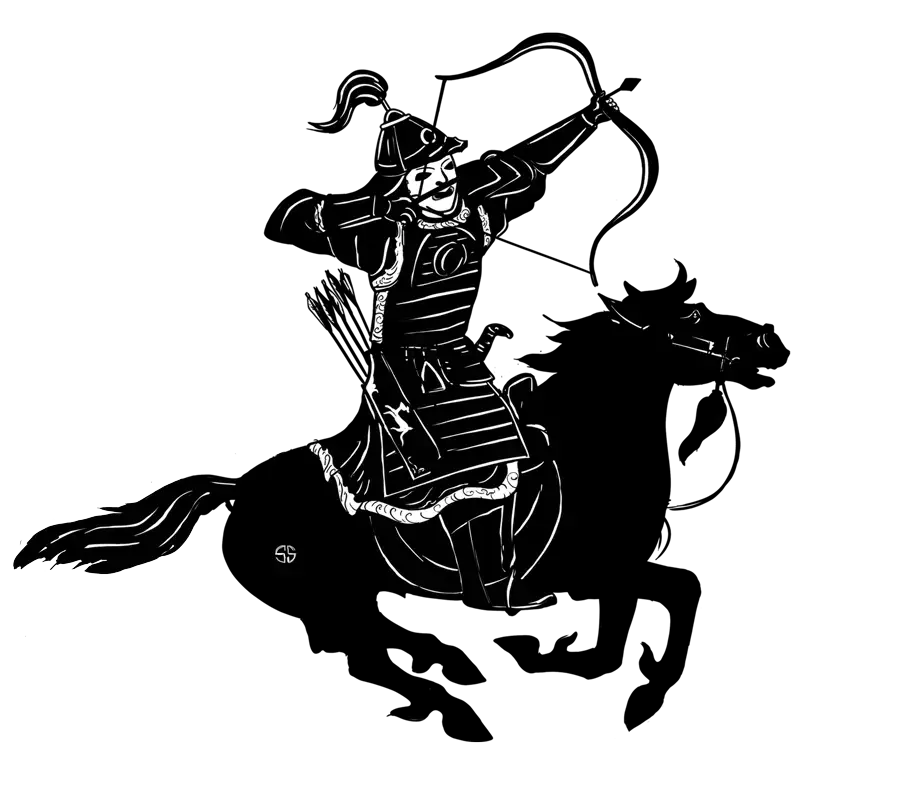
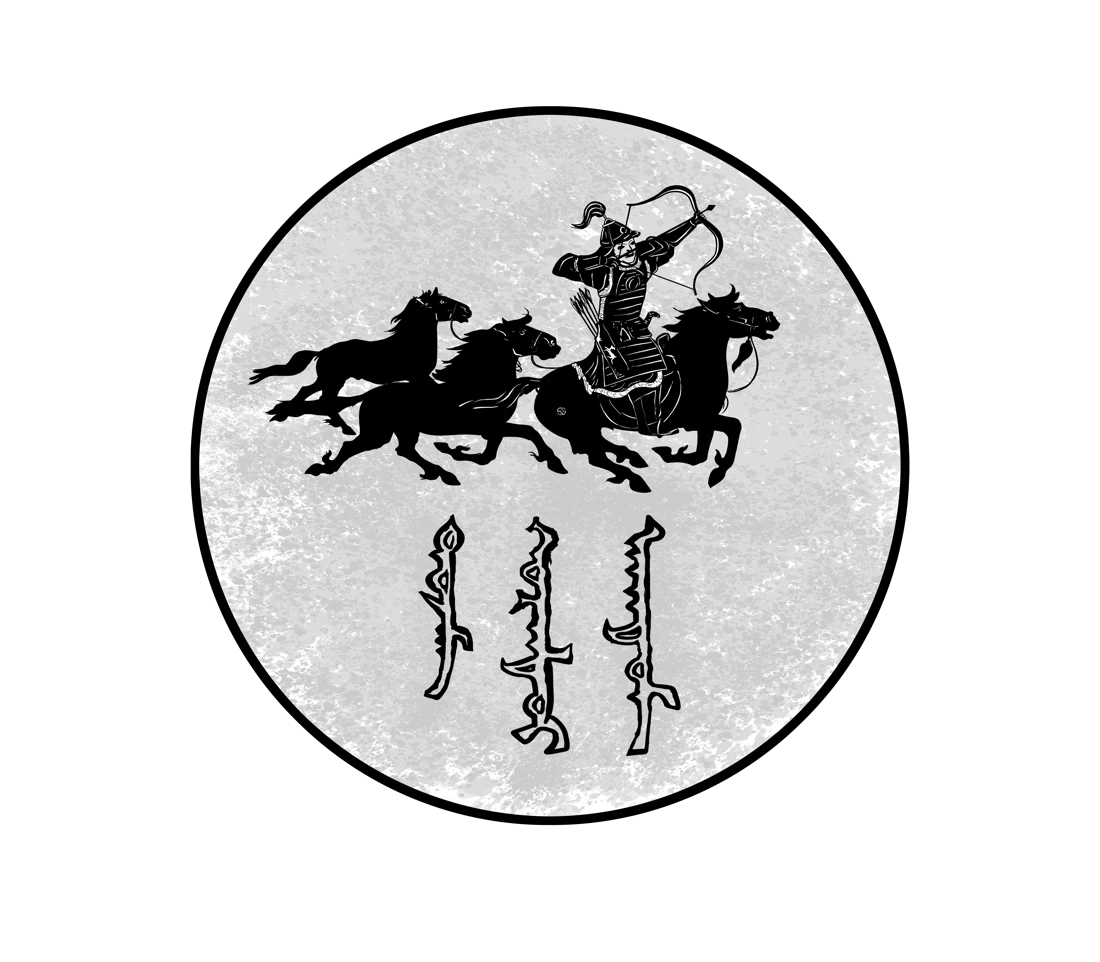
Supplied circular Khuraldai artwork with three horses, a mounted archer, and Mongolian script
The imagery of Tumen Khuraldai

ORIGINS & HERITAGE

The story behind the gathering.

The historical and cultural inspiration set out in the festival declaration and presentation.

Why a winter khuraldai?

The festival renews the tradition of gathering in winter as well as celebrating summer Naadam. The declaration connects the meeting with Tsagaan Sar, remembrance of ancestors, the lighting of household fires, and the welcome of a new year. The full-moon gathering begins by greeting the rising sun and continues toward the rising moon.

The declaration announces 22 January 2027 and describes it in its lunar-calendar wording as the 15th day of the final winter month of the Fire Horse year. This is the calendar description supplied by the organizer.

The presentation invokes a saying that, though harsh, Mongolia’s winter can feel warmer than a foreign summer. It uses this as an expression of welcome and shared celebration, not a comparison of measured temperatures.
Remembrance and historical inspiration

The declaration dedicates the gathering to Modun Shanyu of the Xiongnu, Khabul Khan of Khamag Mongol, and Temüjin Chinggis Khan. Its commemorative framing names the 2,200th, 880th, and 800th years respectively. These are the declaration’s own commemorative descriptions.

The presentation describes Chinggis Khan’s western campaign against the Sartuul between 1218 and 1224, and the pause to winter on the journey home in winter 1224. It links this return with the gathering remembered through the Chinggis Stone and Yesünge’s archery. The presentation notes interpretations placing the gathering in winter 1224 or spring 1225; the declaration names Buga Sochukhai in spring 1225. It also recalls The Secret History of the Mongols: after Khotula’s enthronement, people celebrated and danced beneath the spreading tree at Khorkhunag until the ground was worn bare. These accounts are the historical inspiration supplied for the festival.

The presentation recalls the lakeside gathering at Khar Zürkh’s Khökh Nuur in 1189, where it describes Temüjin being raised as Khan of Khamag Mongol. It then cites the gathering at Ishgen Nuur at the foot of Tengri Mountain in 1250 as laying the ground for succession to pass to Tolui’s descendants. The Baljuna oath of 1203 supplies the festival’s central idea of fellowship: enduring hardship together, sharing success, and remembering one another when fortune changes. The presentation contrasts these lakeside gatherings with the Great Khuraldai associated with Khentii’s Khödöö Aral at the foot of Burkhan Khaldun. Örmii Lake is presented as the birthplace of a new gathering in that spirit. These are source-attributed historical references, not an independently verified timeline.

The heritage around the lake

The presentation describes khirigsuur monuments associated with western Mongolia and slab-burial traditions associated with eastern Mongolia existing beside Örmii Lake. It sees the place as a meeting point of Mongolian cultural traditions. It also links Nayaa Noyon’s central tumen with Tolui’s central domain.

Its regional context includes the ruins identified as Luut City, described as approximately 100 km from the lake; the Khüis Tolgoi inscription in Mongolian Brahmi script in Mogod soum; and the Tümen Amgalant palace, described as two days’ journey away. These are contextual references from the presentation, not advertised excursions or confirmed travel itineraries.

Horse culture and airag traditions from Saikhan and Orkhon soums are central to the choice of location. The presentation cites 2025 horse figures of 52,829 for Saikhan (third in its ranking) and 41,944 for Orkhon (tenth). These source-year figures explain the regional horse-culture context; they are not festival attendance counts.

A lake suited to the idea

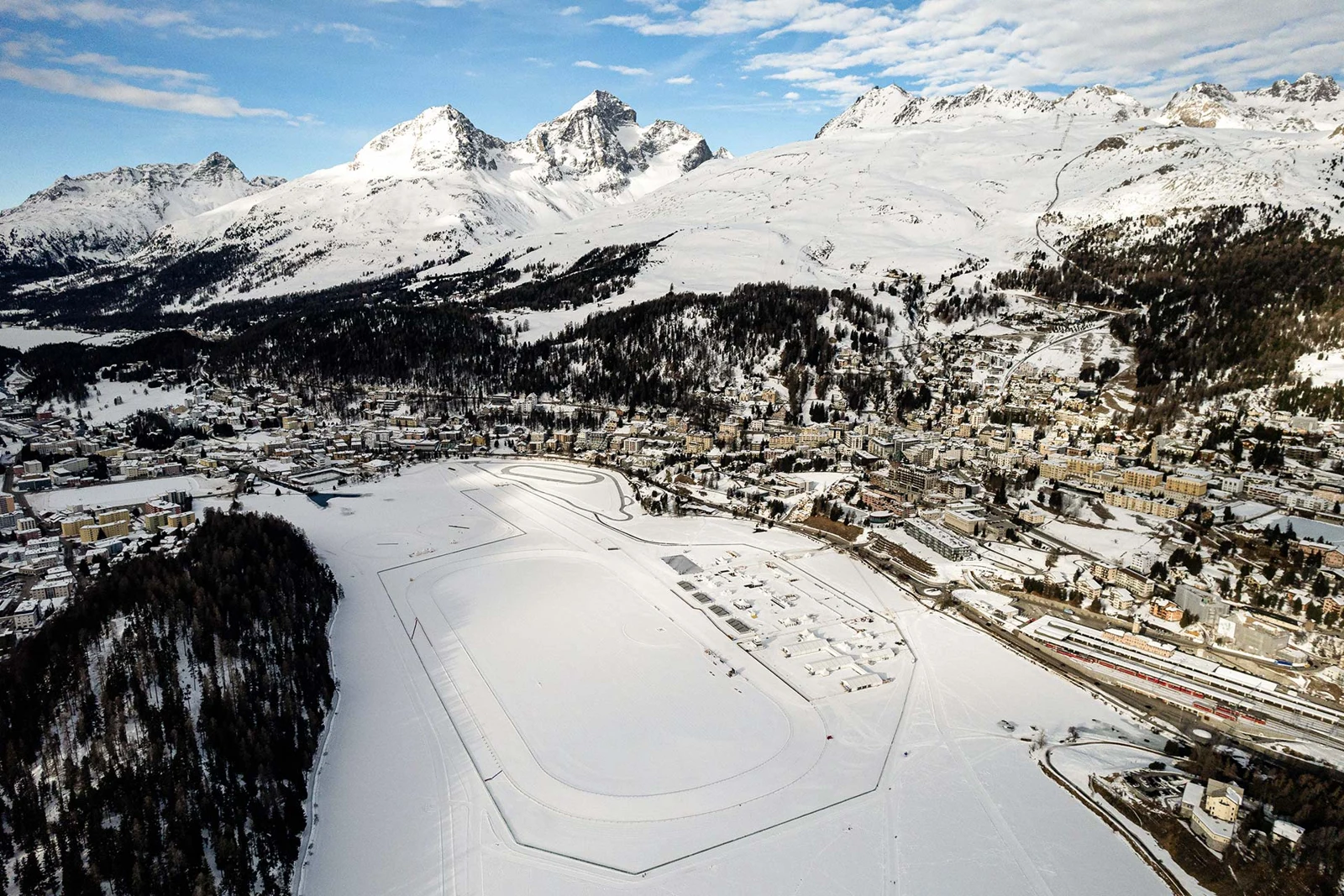
The presentation describes Örmii Lake as approximately 0.7 km², with a longest extent of 1,514.3 m and a width of 689.12 m. As a design reference, it compares the setting with the winter horse-racing tradition of White Turf at St. Moritz, which it dates from 1907, and describes that lake as about 0.78 km², 1.6 km long, 0.6 km wide, and 1,768 m above sea level. This is an inspiration comparison in the supplied presentation; it does not establish ice or course suitability at Örmii Lake.

INTERNATIONAL REFERENCE

Winter games, a world of inspiration.

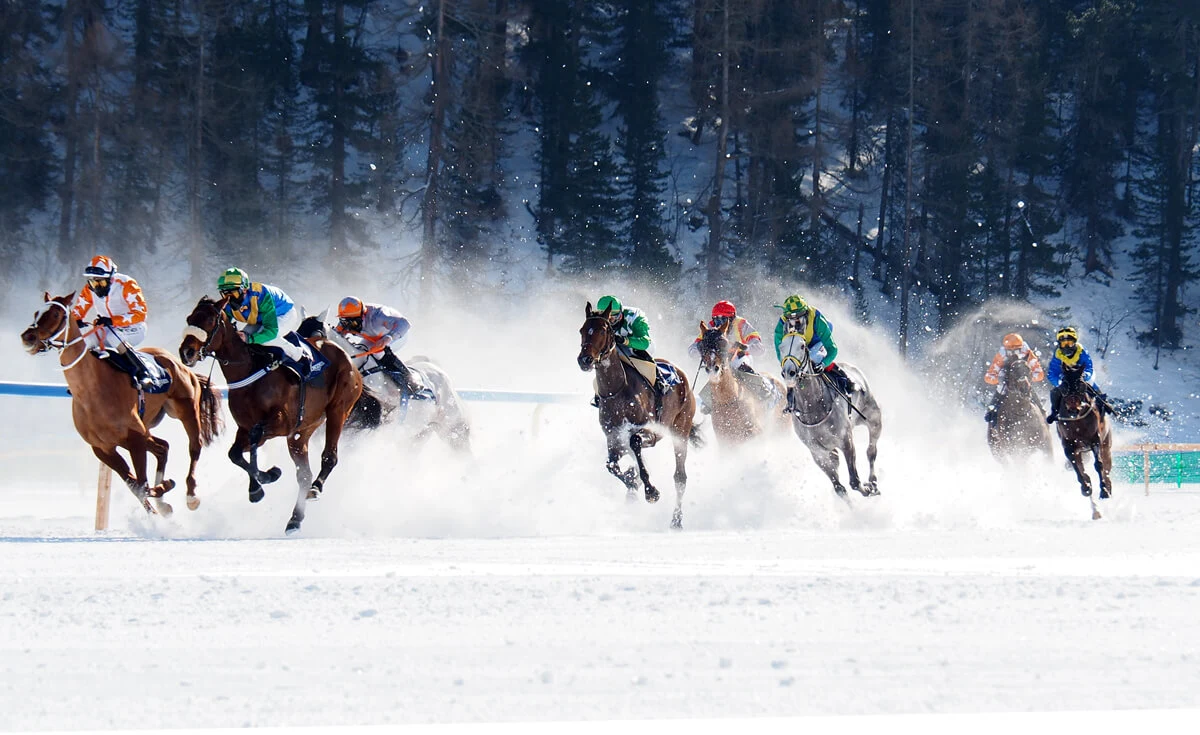
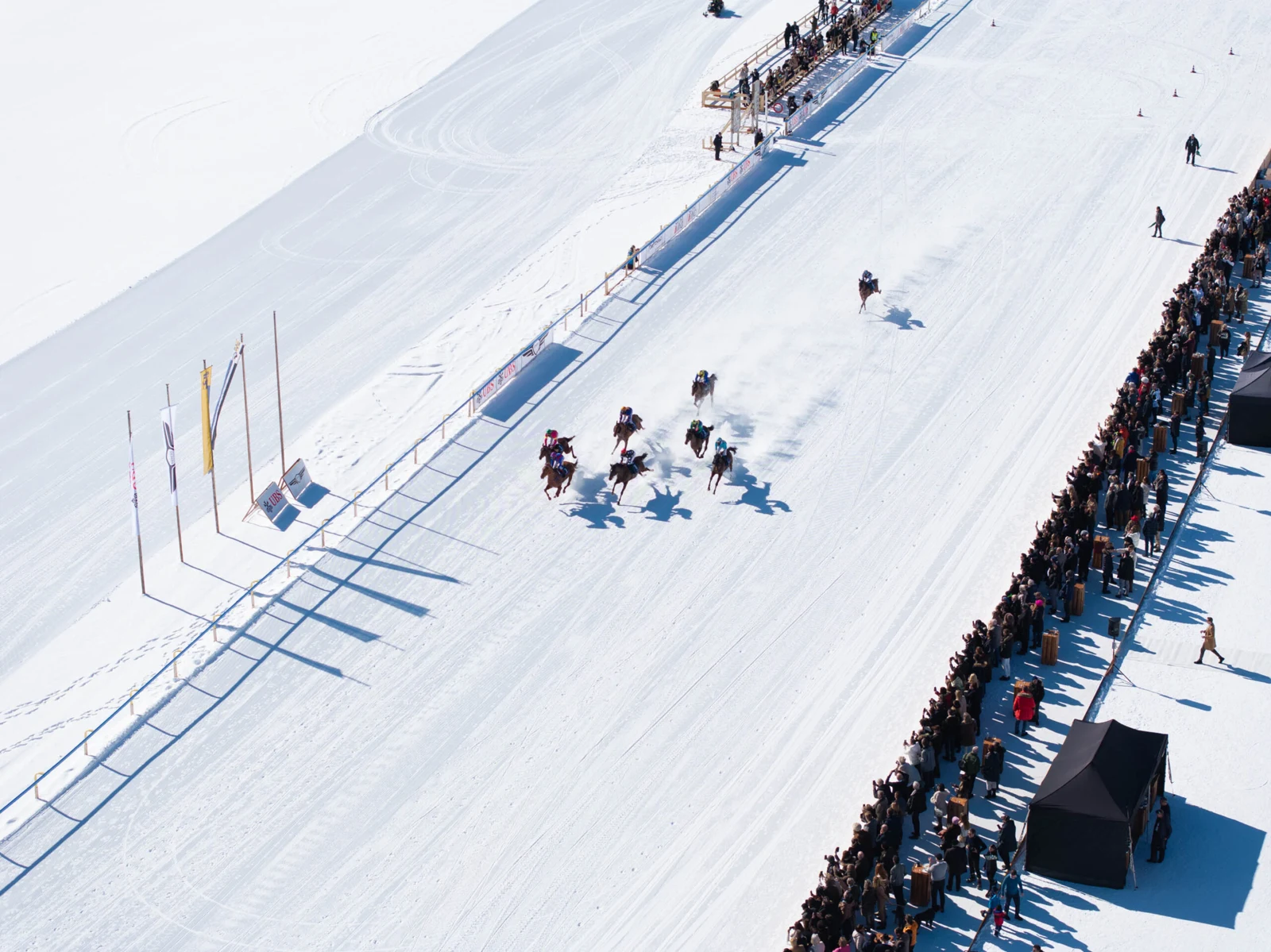
The presentation draws a comparison with White Turf at St. Moritz in Switzerland. These photographs illustrate that international reference, alongside the lake-size comparison in the historical introduction.

Horse-racing reference photograph from White Turf in St. Moritz, Switzerland
Winter horse racing White Turf · St. Moritz, Switzerland
Riders and spectators beside a snow-covered course at White Turf
The course and spectators White Turf · St. Moritz, Switzerland
St. Moritz and the snow-covered lake with its winter-racing layout
The lakeside setting White Turf · St. Moritz, Switzerland

Photographs supplied in the festival presentation, slides 10–11. Shown as an international example, not as Khuraldai event photography or an affiliation.

02 / THE STRENGTH OF THE ARAVT

Ten competitors. One aravt.

The aravt, a team of ten, is the basic unit of competition. The rules provide for ten aravts and 100 main competitors, bringing Mongolian and international men and women into each team.

07Mongolian men
01International man
01Mongolian woman
01International woman

Competitors must be over 18. Each aravt may have up to two male and two female reserves.

How the overall result is decided+

Placements in each discipline convert to points. The four scores are added together; the aravt with the highest total leads.

How the overall result is decided
Place12345678910
Points1512108654321

Overall ties are resolved first by the number of first places, then second places. The next comparison is the higher placement in Noqai Kerel, Chisel Attack, Yam Relay, then Yesünge, in that order.

Warrior names, captains and dress

The initial rules call the main male competitors “Manguud” and the main female competitors “Baarin”. The aravt captain is distinguished by the colour of the helmet pennant. Clothing preserves a traditional Mongolian warrior appearance. A protective equestrian helmet is mandatory; felt or sheepskin may be used over it to create the traditional silhouette.

Worked scoring example

The rules illustrate the calculation with Borjigin aravt: 15 + 10 + 12 + 8 = 45 points, and Tümen aravt: 8 + 15 + 6 + 15 = 44 points. Borjigin ranks ahead in this example. These names and totals are an illustrative calculation, not an announced team list or real result.

Safety and the scope of version 1.0

The safety of horses, athletes, referees, and spectators comes first. Before competition, technical regulations must approve the courses and arenas, protective equipment, eligibility, medical readiness, and referees’ authority to stop events. The initial concept does not replace trials or risk assessment.

The four-discipline concept and written rules are version 1.0 (2026), authored by Tseengiin Enkhjavkhlan, with property rights held by the author. The document covers competition names, structure, team organization, the gerege ceremony, and scoring. Prize funds, gifts, trophies, medals, opening and closing artistic productions, and building designs are outside that rules document.

04 / BEYOND THE COMPETITION

Welcome the sun. Gather beneath the moon.

The declaration sets out nine commitments, from remembrance and the winter games to horse culture, the Gobi caravan, and the festival anthem. These describe the announced vision; detailed timings and confirmed participation will follow.

01 / Convene the khuraldai

Convene Tumen Khuraldai in 2027 on the 15th day of the final winter lunar month of the Fire Horse year, with the announced date of 22 January at Örmii Lake.

02 / Remember, celebrate, gather

Recall history and ancestors, celebrate cultural heritage in song, and create Tengri Arena as a gathering place beneath the sky for games and celebration.

03 / A gathering of knowledge

Hold “Baatar Tümnii Erdmiin Khurim” on lunar day 14 before the festival, studying and sharing the history and cultural heritage of the ancestors. A separate Gregorian date and detailed timetable are not supplied.

04 / The winter games

Organize a winter Naadam under a dedicated programme, with the hunting horn and great drum calling people to the gathering. The presentation imagines welcoming the morning sun and celebrating through to the evening moon.

05 / The standard of the gathering

Open the ceremonial gate of the sky and install Nayaa Noyon’s nine blue-maned standard, associated in the declaration with his bay stallion, as the festival’s revered symbol.

06 / Ten aravts and fellowship

Bring ten selected aravts together to demonstrate speed in horse relay, accuracy in archery, skill with the saber, and wrestling strength. Each aravt welcomes an international man, an international woman, and a Mongolian woman alongside its Mongolian men, joining competitors through fellowship.

07 / Horse culture and airag

Present the horse culture and airag celebration of Bulgan province, especially Saikhan and Orkhon soums. The declaration’s ambition is to bring the sound of 20,000 horses to the lake and share that spectacle with the world. This is a declared ambition, not confirmed attendance.

08 / A caravan from the Gobi

Celebrate trade heritage with a proposed caravan of 500 camels carrying goods from the Gobi. The declaration frames this as remembrance of the loss of the trading embassy and caravan sent by Chinggis Khan to the Sartuul people. The caravan remains an ambition rather than a bookable service.

09 / The festival anthem

Bring the Tumen Khuraldai festival anthem to life as part of the gathering’s shared cultural expression.

THE FESTIVAL ANTHEM

A call from the gathering.

The complete original Mongolian lyrics from the festival presentation.

View the source lyrics

“ТҮМЭН ХУРАЛДАЙ” НААДМЫН ДУУЛАЛ

Дэлхийд өргөх дуудлага

Ээрэм тал сэтгэл гижигдэх,Өрмийн нуур мэлмий мялаах цаг дорЭрэлхэг түүхт хүн зонМиний нутагт хурна

Эртний голомтын элч дөлнөөсЭрхт тэнгэрийн дуудлагаасМонголын үнэртэй салхинаасБаатар түмний хийморь сэрнэ

Хурай, хурай — хуртугай!Өмнө умардын ахан дүүсӨрнө дорнын олон түмэнӨөр өөрийн өвгөддөө мэхийгтүн!

Уухай, уухай — тэмцтүгэй!Түмэн агтын төвөргөөнЗуун баатрын алдар сууДэлхий дахинд түгэгтүн!

Алсын уулсыг даван ирэгАгуу тэнгисийг гатлан наашлагАмар мэндийн гараа сунгагАз жаргалыг тэврэн золго!

Хүчтэн нь хүчээ үзэгХарваач нь цэцээ соригХүлэг нь шандсаа гайхуулагХүмүүн нь андаа олог!

Олон одны дундаасСарны гэрэл тодорхойОлон хүний дундаасЯндар мэт чимэгтэй

Ойр алс нутгийн үр сад!Ондоо ондоо түүхийн эзэд!

Харж дээдэлсэн - Хан хурмаст нэг!Хайрлаж шүтсэн - Хангай дэлхий нэг!Засгаар дархалсан - Нуур ус нэг!Наран нэг! Саран нэг!

Мөнх хөх тэнгэрийн ивээлээрТүмэн газрын жам нийлнэЭвийн хүч, энх тайвныДуудлага нь - Түмэн хуралдай!

Алсаас:

Түмэн амар уу?Анд сайхаан.

10 ARAVTS. 100 WARRIORS. ONE FESTIVAL.

Your story belongs on the steppe.

Apply to become a warrior

Explore the local application preview. No real applications are sent yet.